


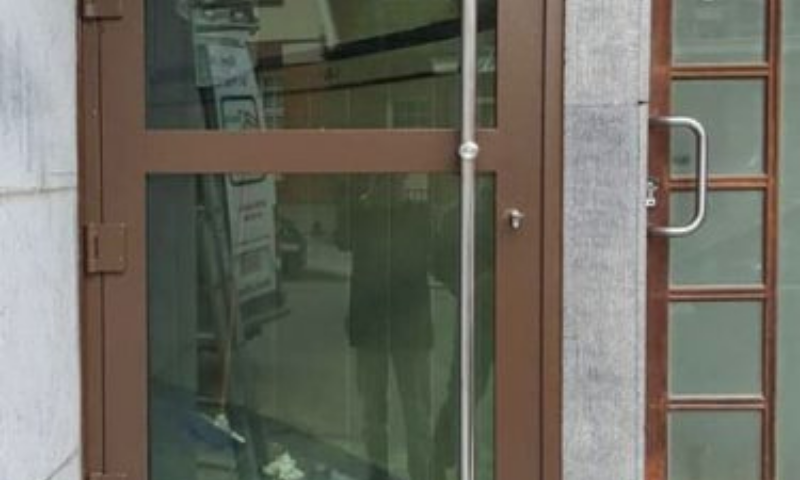
When people talk about bullet proof doors, they often imagine something straight out of an action movie: a door that no bullet can get through, no matter what. But the truth is more complex and more important to understand if you’re serious about security.
In the professional world, we don’t say “bullet proof.” We say bullet resistant. Why? Because no door is truly 100% bulletproof. With enough force, time, or the right weapon, even the strongest door can eventually break. That doesn’t mean doors can’t protect you. Quite the opposit, they can offer excellent protection. But it depends on choosing the right one for your needs.
So, What Is a Bullet Resistant Door?
Think of a bullet resistant door not as something that makes you untouchable but as a smart, protective barrier built to give you time, safety, and peace of mind. These doors aren’t all the same. Some are made to stop small handgun bullets, while others are built to handle much stronger threats, like rifle fire. The difference comes down to what the door is made of and how much force it’s designed to resist.
In the security world, we don’t guess but we measure. That’s why doors are tested and rated using standards like UL 752, which help us understand exactly what each door can handle. For instance, a door rated at Level 1 might stop a few shots from a basic 9mm pistol. A Level 3 door is stronger and could block a powerful .44 Magnum. The highest levels are built for intense, repeated gunfire from military-grade weapons.
So instead of asking, “Is this door bulletproof?” A better question would be:
“What kind of threat am I actually preparing for?”
Why “Bullet Proof” Can Be Misleading
The term “bullet proof” has a powerful ring to it but it sounds final, almost invincible. But that’s exactly where the problem lies. It can give people the impression that once a door is labeled as bullet proof, it’s untouchable, that no force in the world could ever break through it. In reality, though, protection doesn’t work that way. Every bullet resistant door is carefully tested under controlled conditions: specific types of bullets, fired from specific distances, in limited numbers. These doors are not made of magic, but of engineering and design tailored to particular threats. If a weapon stronger than what the door was built to withstand is used, failure is possible. That’s why professionals in the field prefer more accurate language. Calling it “bullet resistant” doesn’t make it weaker but it simply helps everyone make clearer, smarter decisions about their safety.
What Are These Doors Made Of?
Bullet resistant doors are built from a mix of strong materials. The outside might look like a regular door, but inside, there’s a powerful combination of layers.
Often, there’s hardened steel to absorb impact. Inside the door, there could be Kevlar or fiberglass, materials that are designed to catch the bullet, spread out the force, and stop it from passing through. In some cases, bullet-resistant glass is added to allow visibility without sacrificing safety.
All these layers work together to protect the people and space behind the door. They also reduce the risk of sharp metal fragments (called spall) from flying inward when a bullet hits.
Where Are These Doors Used?
At first glance, a bullet resistant door might look like any other: sleek, solid, and unassuming. But behind that familiar surface lies a carefully engineered structure made up of several powerful layers. These doors are built to do far more than just look strong, they’re designed to absorb and redirect intense force. Inside, you’ll often find hardened steel, which helps take the initial impact. Deeper within, materials like Kevlar or fiberglass come into play. These aren’t just strong but they’re flexible, able to catch a bullet, spread out its energy, and prevent it from breaking through. In some doors, ballistic glass is added as well, allowing visibility without compromising protection. Together, these layers form a quiet but powerful system, one that protects not just the entryway, but the people and space behind it. And just as importantly, they help reduce the danger of sharp metal fragments, known as spall, that can be just as harmful as the bullet itself.
The Importance of Getting It Right
Choosing a bullet resistant door isn’t just about finding the strongest option on the market but it’s about finding the right one for your specific needs. Strength alone doesn’t guarantee safety. A door designed for a military base might be unnecessary, or even impractical, for a retail store or a private residence. That’s why context is everything.
Start by asking yourself: What exactly am I trying to protect? Is it people, information, assets or perhaps all three? The type of threat also matters. In some environments, the concern may be opportunistic break-ins with handguns. In others, it could be targeted attacks involving high-powered rifles or even explosives. Understanding your risk helps define the level of resistance required.
Then there’s the environment itself. Will the door be exposed to the elements? If so, you may need protection not only from bullets, but also from heat, moisture, or fire. And what about aesthetics? Does the door need to blend into a welcoming commercial space or match the clean lines of modern architecture? In many cases, a door must be both discreet and durable and capable of protecting without announcing its presence.
Finally, consider functionality. Do you need visibility through the door? In banks, guard booths, or reception areas, clear ballistic glass may be essential. In safe rooms or storage areas, a solid core door might be more appropriate.
Each of these details plays a vital role in shaping the right solution. Because when lives, safety, or sensitive materials are on the line, the right door isn’t just a piece of hardware, but it’s a decision that must be made with thought, care, and the guidance of professionals who understand what’s at stake.
Let’s Talk About the Language We Use
It’s easy to be drawn to words like “bullet proof.” They sound bold, absolute and even comforting. But sometimes, that kind of language can cloud our judgment. In the world of real security, clarity matters. When we say bullet resistant, we’re not being cautious, but we’re being accurate. It’s a term that reflects the way these doors are actually designed: tested, rated, and built to stand up to specific threats under specific conditions. And that difference in wording? It helps us choose better. Because in the end, the question isn’t whether a door is unstoppable, but it’s whether it can give you the time and protection you need, exactly when it matters most.
Why G.G. Defense Systems Is the Partner You Can Trust
At G.G. Defense Systems, we believe in clarity, honesty, and real protection. We don’t promise you “bullet proof doors”, but we deliver custom-engineered, bullet resistant doors that are tested, certified, and built to fit your exact situation.
From military facilities and secure offices to private homes and critical infrastructure, we offer a full range of solutions which is backed by years of experience, expert installation, and a deep understanding of modern security needs.
Let’s build your protection the right way. Contact G.G. Defense Systems today to speak with our experts and find the bullet resistant door that’s right for you.