


Designing buildings to withstand blasts was once associated only with bunkers, military bases, or heavy concrete fortifications. Today, architects and engineers are asked to think about blast resilience in a much wider range of projects: critical infrastructure, public buildings, transport hubs, data centers, and sometimes even commercial or mixed-use sites. The challenge is clear: how do you protect people and assets without turning every structure into a fortress? The answer increasingly lies in the use of blast resistant materials: advanced materials engineered to absorb, redirect, or dissipate the shockwave created by an explosion. These materials help reduce damage, improve safety, and support structural continuity, while still allowing designers to preserve comfort, daylight, and aesthetic freedom. To design effectively for blast events, it is essential to understand what happens during an explosion, which material properties matter most, and how to translate engineering principles into practical design strategies.
What actually happens to a building during a blast?
An explosion releases a large amount of energy almost instantaneously, generating a shock wave of very high pressure that travels outward at high speed. Unlike static loads such as gravity or slow wind forces, blast loads are dynamic, short in duration, and highly damaging to brittle or poorly detailed elements. A blast wave creates a sudden spike in air pressure, followed by a rapid drop and potentially reflections as the pressure rebounds between hard surfaces. Conventional materials often fail not because they are weak under everyday loads, but because they respond badly to these rapid pressure changes. Glass can shatter into dangerous fragments, rigid concrete can crack or spall, and lightweight panels can tear free and become projectiles. This is where blast resistant materials make a measurable difference. They are engineered to deform at high strain rates, absorb part of the energy without failing catastrophically, and stay attached to the supporting structure. By choosing materials and systems that bend rather than snap and remain anchored under impact, designers can greatly reduce secondary injuries and localised structural damage.
Which material properties matter most when designing for blasts?
Not every strong material behaves well under blast loads. The characteristics that matter most are often different from those considered in conventional structural design. Ductility, the ability of a material to deform without fracturing, is critical for minimizing blast damage. Materials that can stretch or bend under extreme, short-term loading help dissipate the shock wave rather than transmit it directly into the building. Energy absorption is equally important: tough materials can take in the kinetic energy of the blast and slow its effects. In this context, blast resistant materials may include laminated glazing with flexible interlayers, composite panels that combine stiffness with elasticity, or metal alloys formulated to deform safely under high strain. Connection details matter as much as the panels themselves: adhesives, anchors, and hardware must be selected and tested to match the blast performance of the visible elements. Weight also plays a role; lighter materials with a high strength-to-weight ratio place less demand on the supporting frame. Understanding these properties helps designers choose not only the right materials but the right combinations of layers, joints, and reinforcements.
How can blast resistant materials be integrated into real projects?
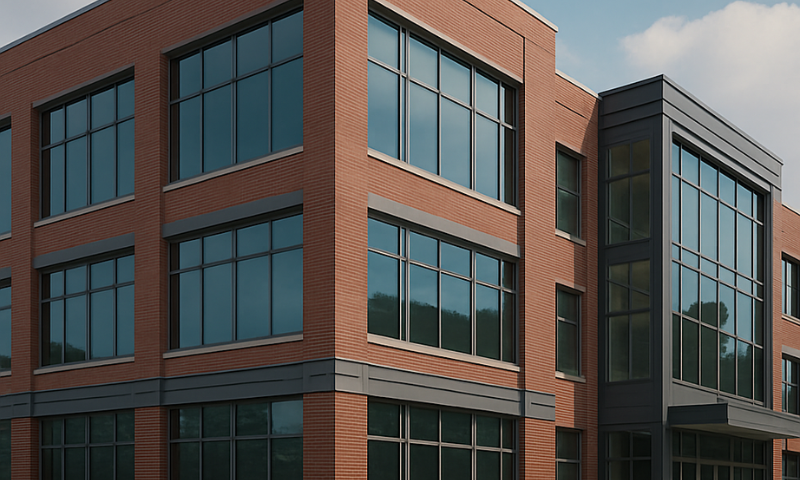
Many architects worry that security requirements will compromise the appearance of their buildings. Fortunately, modern blast resistant materials are designed to merge with contemporary architecture rather than fight it. Laminated glazing can look almost identical to standard curtain walls while providing a significant level of blast mitigation. Composite cladding panels can be produced in familiar thicknesses, textures, and colours, yet deliver far better performance in an explosion. Structural membranes or coatings can be applied behind visible finishes, completely hidden from view but highly effective when needed. Integration starts with mapping risk zones: identifying vulnerable openings, critical rooms, and areas with high occupancy. Designers can then specify tested systems instead of ad-hoc combinations of components. A blast-rated window, for example, is an assembly of glazing, frame, anchors, and fixings tested together as a unit. Early collaboration between architects, engineers, and security specialists ensures that the chosen systems fit both the performance criteria and the architectural intent, so the building feels open and modern while quietly incorporating enhanced safety.
What practical steps can designers take from concept to specification?
Turning blast engineering into real design decisions becomes manageable when the process is broken into clear stages. First, carry out a realistic threat and risk assessment: what type of blast is plausible, at what stand-off distance, and which areas are most important to keep operational after an event. Second, prioritise where blast resistant materials are truly needed, such as public façades, main entrances, mechanical rooms, or areas housing critical infrastructure, rather than applying them everywhere. Third, select systems that have been tested to recognised blast standards, instead of relying on unproven assemblies. Fourth, ensure that installation details are taken seriously: even the best materials will fail if fixed to weak substrates or installed with inadequate anchors. Finally, document the design clearly in drawings, specifications, and method statements so that contractors understand the intent. With this approach, blast protection becomes an integrated part of the project rather than an expensive add-on.
How do blast resistant materials support both safety and usability?
The most successful blast-resilient buildings are those that remain pleasant and functional in everyday use. Many modern materials provide benefits far beyond security. Laminated glazing can improve acoustic insulation, reduce UV penetration, and enhance comfort near windows. Composite cladding can deliver better thermal performance and durability than older systems. Flexible membranes and coatings can increase resistance to weathering, reduce cracking, and lower maintenance over time. When blast resistant materials are selected thoughtfully, they contribute simultaneously to safety, sustainability, and user comfort. Occupants enjoy quiet, stable indoor environments without being constantly reminded of the building’s protective features. For owners and operators, this dual advantage means lower lifecycle costs and greater operational resilience: the building is better prepared for extreme events while performing efficiently every day.
Why to choose G.G.Defense Systems?
Effective blast-aware design starts with materials that respond intelligently under extreme stress. By integrating blast resistant materials into key parts of the envelope, designers can significantly reduce damage during an explosion while maintaining openness, daylight, and architectural quality. These materials transform the way structures handle pressure, helping protect people and assets without sacrificing aesthetics or usability. Achieving this balance requires tested products, careful detailing, and the support of an experienced partner. G.G. Defense Systems specialises in advanced blast-rated solutions, including façades, glazing, louvers, and protective components tailored to modern security demands. If you are planning a new project or upgrading an existing facility, this is the right time to review your material strategy and ensure your design includes the level of protection it truly needs. Contact us to learn how smart material choices can strengthen your building without limiting your vision.