


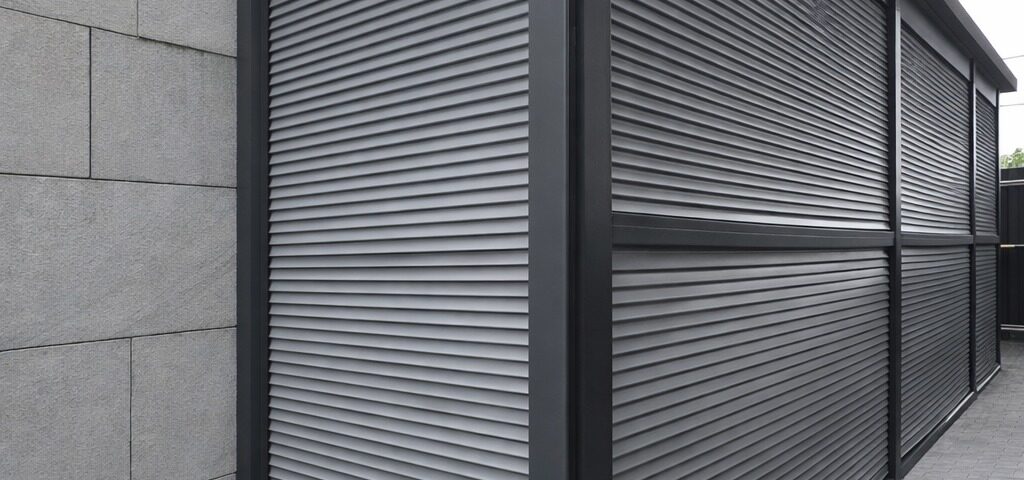
In many facilities there are rooms that are both highly sensitive and fully dependent on a constant flow of air. Generator rooms, server rooms, control rooms and communication hubs cannot be sealed behind solid walls, because the equipment inside produces heat and must be ventilated to keep working safely. At the same time, these are often the rooms an attacker would most want to damage or shut down. The building may have strong walls, secure doors and even ballistic glazing, but the moment you open large ventilation openings in the envelope you create potential weak points. Managers and security professionals therefore face a very specific question: how do you keep these rooms supplied with air without leaving obvious gaps in the physical protection of the site.
Why are ventilation openings often the weakest point in a secure building?
In secure buildings a great deal of attention is usually given to doors, locks and visible entrances, and in some sites these elements even receive ballistic or blast-resistant upgrades. By contrast, louvered ventilation openings are often treated as a purely mechanical issue. Standard louvers are designed to move air and stop rain and debris, not to resist determined physical attack. They normally use thin blades and light frames that are much easier to cut, strike or shoot through than a reinforced door or window. The result is that a building can appear robust while the technical openings around plant rooms quietly undermine the overall level of protection. Because these openings cannot simply be closed without affecting the equipment, high-risk sites that depend on outside air increasingly turn to ballistic louvers that combine ventilation with a defined level of resistance against bullets and forced entry.
Which types of sites actually need ballistic louvers?
Ballistic protection for ventilation is not relevant for every project, but there are clear situations where it should be examined seriously. Facilities that host critical power systems, such as standby generators for hospitals, airports, data centers or emergency operations centers, rely on those systems when everything else is under stress. If the generator room is exposed through standard louvers facing a public area, that becomes a point a motivated attacker might try to exploit. Similar questions arise in server rooms and data centers that draw large volumes of outside air, in control rooms that oversee transport or energy networks, and in secure communication hubs where disruption could affect many people beyond the site itself. In some government buildings, embassies and high-level corporate offices, plant rooms or protected spaces sit close to the facade and are ventilated directly through external openings. In all these contexts, ballistic louvers allow the required airflow while significantly reducing the chance that an attack on the opening will disable the room behind it.
What should you review before upgrading to ballistic louvers?
Before investing in any advanced physical protection measure it is important to look at the site and the risk in a structured way. A useful starting point is to define the main threats: is the concern simple vandalism, or is there a realistic risk of firearms being used against the building and deliberate attempts to damage technical systems. The next step is to map existing ventilation openings and identify which ones are linked to rooms that are genuinely critical to safety or continuity, such as generators that support life-safety systems, main server rooms, control centers and key communication nodes. In many facilities it turns out that only a limited number of openings justify ballistic protection, while others can remain at a standard security level. It is also necessary to review the basic engineering requirements of each opening, so that any change in louver design does not compromise airflow or maintenance access. Working with a specialist who understands both security and ventilation helps translate these needs into clear ballistic louvers specifications instead of guesswork.
How can ballistic louvers support both security and continuity?
When critical rooms depend on outside air, losing those rooms in the middle of an incident can have effects far beyond the damaged space itself. If a generator fails, a facility may go dark just when it is needed most. If a control room or network hub is knocked offline, transport, energy or communication systems may be left unmanaged at a crucial moment. For organizations that care about continuity of operations, protecting these spaces is therefore not only a matter of physical safety but also a way to maintain essential services and avoid long downtime. By hardening ventilation openings with ballistic louvers, you reduce the chance that a direct attack on these weak points will disable the systems behind them, while still providing the airflow and cooling the equipment needs in normal operation and in emergencies. Modern solutions can be integrated into the architecture of the building and engineered for durability and straightforward maintenance, so they do not create new operational problems for the site.
Summary and next step
Every secure building is a balance between protection, function and cost, and this balance is especially visible in how technical openings for ventilation are treated. Standard louvers are appropriate for many low-risk environments, but in facilities where certain rooms are truly critical it is important to recognize that these openings may be the weakest point in the entire envelope. By taking the time to understand which rooms cannot easily be shut down, what level of threat is realistic for the site, and how air and security must work together rather than against each other, decision-makers can avoid blind spots in their protection strategy and deploy ballistic louvers only where they add real value.
G.G Defense Systems works with organizations that face this type of challenge and helps them turn security concerns into practical solutions for real buildings. Our teams design, manufacture and install certified protective elements, including ballistic louvers for high-risk ventilation openings, as part of broader concepts that take into account threat levels, engineering constraints and day-to-day operation. If you are responsible for a site where critical equipment depends on outside air and you are not fully confident in the current level of physical protection, we invite you to contact G.G Defense Systems for a focused review and a tailored plan that strengthens your building without compromising the systems that keep it alive.