


Can Louvers Improve Airflow Without Reducing Safety?
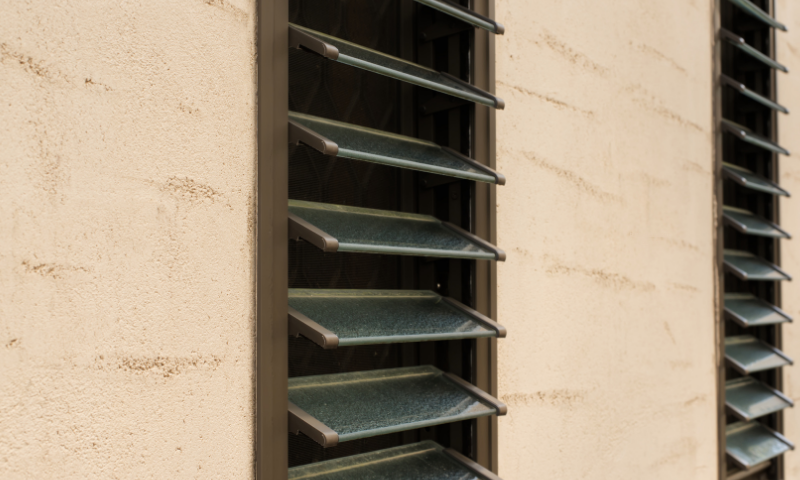
Modern buildings are designed to feel open, efficient, and comfortable, yet many of the facilities that matter most today also face serious security requirements. Data centers, public infrastructure, transportation hubs, industrial plants, and high-risk commercial sites all share the same challenge: they need reliable ventilation, but they cannot afford weak points in the building envelope. That is where blast resistant louvers come in. These systems are built to keep air moving while providing engineered protection against explosive forces, helping owners reduce risk without turning a functional building into a sealed fortress. For architects and engineers, the topic is not only security; it is also performance, compliance, and daily usability. A well-chosen louver solution supports airflow and building operations, but in extreme conditions it can also prevent catastrophic failure at one of the most vulnerable parts of any structure: the opening.
Why ventilation openings are a common weak point?
Every building needs openings. Mechanical rooms require intake and exhaust. Generators need air. Cooling systems need fresh airflow. People need comfort and indoor air quality. The problem is that openings are naturally weaker than solid walls. During an explosion, pressure waves travel fast and hit the exterior with sudden force. If a ventilation opening fails, the blast can push debris inward, damage interior systems, and increase injury risk by sending fragments into occupied areas. Even when the surrounding structure is strong, an uncontrolled opening can undermine the whole protective strategy. This is why blast resistant louvers are not just a product add-on; they are a critical part of making the envelope behave predictably under extreme load. They are designed to stay anchored, resist deformation that leads to detachment, and limit the dangerous transfer of pressure and debris through the opening.
How blast resistant louvers maintain airflow while adding protection?
A common misconception is that security solutions automatically reduce ventilation performance. In reality, blast resistant louvers are engineered specifically to avoid that tradeoff. They are designed to deliver airflow capacity while also meeting blast performance requirements, using reinforced blades, stronger frames, and robust anchoring methods. The goal is to keep the louver functional for everyday ventilation demands, but to ensure the system remains intact during a blast event. Instead of collapsing inward or breaking free, the assembly is built to absorb and distribute energy through its structure. This means the building can continue to operate normally in daily use, with airflow that supports HVAC performance, equipment cooling, and pressure management, while still benefiting from a hardened opening that does not become a liability under sudden load. For facilities where uptime is essential, this balance between airflow and protection is not a luxury; it is operational resilience.
What to look for when specifying louvers for safety-critical facilities?
Choosing the right louver is not simply selecting a stronger version of a standard product. Performance depends on the full system: blades, frame, supports, anchors, and the way the unit is integrated into the wall. A louver that looks solid can still fail if installed on weak substrates or with inadequate fixings. For blast resistant louvers, it is essential to choose systems with documented performance testing and engineering support. Designers should consider factors such as where the louver will be installed, what type of airflow is required, whether the opening faces potential threat directions, and how the surrounding wall construction will support the assembly. The best results come when security requirements are included early in the design process, not added at the end. When blast protection is treated as part of the architectural and mechanical planning, the solution can be integrated cleanly and efficiently, without redesigns or last-minute compromises.
How these louvers support everyday performance, not only emergency readiness?
The true value of blast resistant louvers is that they protect without disrupting daily life and operations. Many facilities need consistent airflow to prevent overheating, maintain indoor comfort, and support equipment reliability. A well-designed system can reduce unwanted vibration, improve durability, and contribute to long-term maintenance savings compared to weaker assemblies that degrade over time. In many projects, these louvers also help simplify security planning, because the ventilation opening no longer requires improvised solutions or layered patchwork protection. Instead, the opening becomes part of a coherent building envelope strategy that supports both safety and functionality. For owners, this means fewer vulnerabilities, better control over risk, and a facility that remains modern and usable, rather than feeling restricted by protective measures.
Conclusion
Ventilation is essential, but openings should never become the weakest link in a building’s security plan. Blast resistant louvers solve a critical problem by protecting airflow paths without sacrificing the performance modern buildings rely on every day. They help control how the envelope behaves during an explosive event, reducing the chance that a ventilation opening becomes a point of failure that threatens people, equipment, and operations. When specified correctly and integrated as a complete system, these louvers allow engineers and architects to meet both safety goals and functional requirements in a single, practical solution.
Why choose G.G. Defense Systems?
At G.G. Defense Systems, we design and supply advanced blast resistant louvers engineered for real-world facilities where both airflow and protection are non-negotiable. Our solutions are tailored to your project requirements, supported by professional engineering guidance, and built to integrate cleanly into modern architecture and mechanical systems. Whether you are protecting a data center, public facility, industrial site, or critical infrastructure project, our team can help you select and implement a louver strategy that strengthens the building envelope without compromising operational performance. Contact G.G. Defense Systems today to discuss your project and receive expert support in planning secure, high-function ventilation openings that meet today’s risks and tomorrow’s expectations.