


Which Protective Door Type Fits Your Risk Profile?
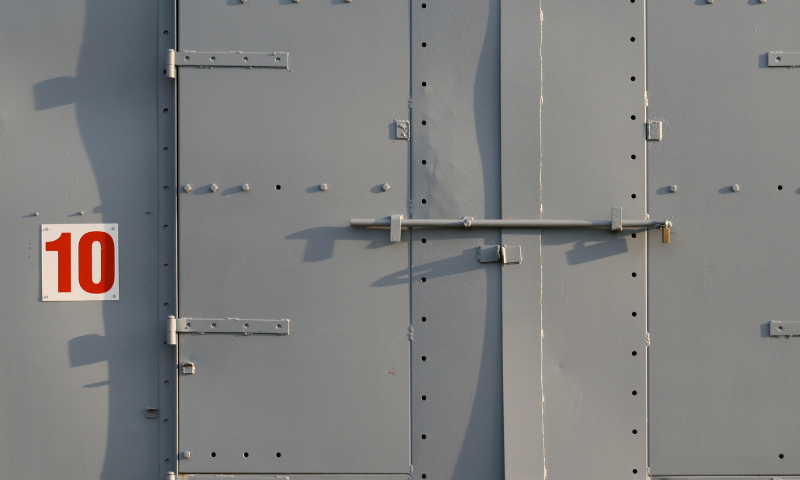
When organizations begin planning protection for high-risk environments, one of the first questions they face is what kind of door is actually required. Very quickly, two terms appear in discussions and online searches: bunker door and blast door. They sound similar and are often used interchangeably, but they represent different design priorities. Choosing based on the name alone can lead to unnecessary costs or, worse, inadequate protection. The real decision depends on the threat scenario, how the space will be used, and what level of performance is required during and after an extreme event. Understanding the difference helps project owners, engineers, and security managers make smarter choices that balance safety, usability, and long-term reliability.
What a bunker door is designed to do?
A bunker door is primarily intended to protect a space that functions as a refuge or controlled area. The emphasis is on creating a secure boundary that remains reliable over time, even when conditions outside the room are dangerous. While the term often brings to mind military shelters, modern applications are much broader. Bunker-style doors are used in private shelters, safe rooms, secure storage areas, and protected control rooms inside civilian and commercial facilities. These doors are typically built with heavy construction, reinforced frames, strong locking mechanisms, and durable hinges that support repeated daily use. The goal is not just to resist a single extreme event, but to provide consistent protection, controlled access, and confidence that the room behind the door remains secure. In this sense, a bunker door is chosen when the protected space itself is the priority, and when long-term stability, intrusion resistance, and dependable operation matter as much as raw strength.
What a blast door is engineered to handle?
A blast door is designed around a very specific threat: explosive pressure. When an explosion occurs, the resulting shockwave reaches a building almost instantly, creating a rapid spike in pressure followed by a sudden drop. This dynamic load can cause doors and frames to fail violently if they are not engineered for it. Blast-rated doors are built to survive this short but intense force without detaching from their frames or transferring uncontrolled loads into the surrounding structure. The focus is on predictable behavior under extreme conditions. That includes the door leaf, the frame, the anchoring system, and how the assembly transfers forces into the wall. Blast doors are commonly specified for industrial sites, critical infrastructure, public buildings, and facilities exposed to external threats. While a bunker door may be extremely strong, blast performance requires specific engineering and validation. Without that, even a heavy door may not perform as expected when exposed to a shockwave.
Why confusion between the two can create real risks?
The confusion between bunker doors and blast doors is understandable. From a visual standpoint, both may look similar: thick steel construction, solid frames, and serious hardware. But performance is defined by engineering, not appearance. A door that performs well against forced entry may fail under blast pressure if it was never designed or tested for that scenario. Conversely, a door optimized for blast loads may lack the sealing, endurance, or usability required for a space that functions as a long-term refuge. Problems often arise when terminology is unclear at the planning stage. A project may request a bunker solution when the real risk is blast-driven, or request blast protection when the true need is a secure, controlled room. In both cases, the mismatch can lead to wasted budget or insufficient protection. Another common issue is ignoring the surrounding system. Even the best-rated product can underperform if installed into weak substrates or without proper anchoring. For blast doors, this can result in failure under pressure. For a bunker door, poor integration can lead to alignment issues, sealing problems, and reduced reliability over time.
How to decide which solution fits your project?
The most effective way to choose between a blast door and a bunker door is to define the threat and the desired outcome. If the primary concern is an explosion near the building, such as a vehicle-borne threat or an industrial hazard, blast performance should be the priority. In that case, a blast-rated door assembly provides the necessary resistance to shockwave pressure and helps maintain structural integrity. If the main objective is to create a protected room where people or assets can remain safe and secure, a bunker-style solution is often more appropriate, focusing on intrusion resistance, controlled access, and stable long-term use. Many projects require both approaches in different locations. A facility may need blast-rated openings on exposed façades, while also incorporating a bunker door for an internal safe room. Asking practical questions helps clarify the decision: What is the realistic threat? Where is the door located? How often is it used? Does the space behind it need to support daily operations or emergency refuge? The right solution is the one that matches these answers, not simply the strongest or most expensive option.
Conclusion
Blast doors and bunker doors serve different purposes, even though they are often grouped together. Blast-rated doors are engineered to withstand explosive pressure and remain anchored under extreme loads. A bunker door is designed to create a dependable, controlled refuge with strong intrusion resistance and reliable long-term performance. Understanding this distinction allows project teams to specify protection that truly fits the risk profile and functional needs of the space. When the door, frame, anchoring, and surrounding construction are treated as a complete system, the result is protection that performs when it is needed most, without unnecessary compromise.
Why choose G.G. Defense Systems?
At G.G. Defense Systems, we help clients navigate these decisions with clarity and confidence. Our team designs and supplies engineered protective door solutions for critical infrastructure, industrial facilities, public buildings, and high-risk commercial environments. We offer both blast-rated door systems and bunker door solutions, each tailored to the specific threats, operational requirements, and architectural constraints of the project. By focusing on the full opening assembly and its integration into the building envelope, we ensure that protection is not only strong on paper but effective in real-world conditions. Contact G.G. Defense Systems to discuss your project and receive expert guidance on choosing the right door solution for safety, performance, and long-term reliability.